
A better start for sports surfaces
Built for the sport
Use levels, dimensions and maintenance resources shape the construction from the start.
Drainage and grading linked
The surface only performs well when levels and water movement are planned together.
Commercial setup understood
We factor in machinery access, materials and establishment before regular play begins.
Match the build to the way the pitch is used
For clubs, schools and facilities, a new sports field needs more than a green surface that looks fine from the gate. The intended sport, the frequency of use, the site dimensions, the ground conditions and the maintenance resources all shape what should be built. If those basics are wrong, the pitch tends to show it in puddles, uneven wear or a surface that never properly settles. With Royal Landscapes, we plan sports pitch construction around practical use, not generic assumptions, so levels, drainage and establishment are working towards the same end.
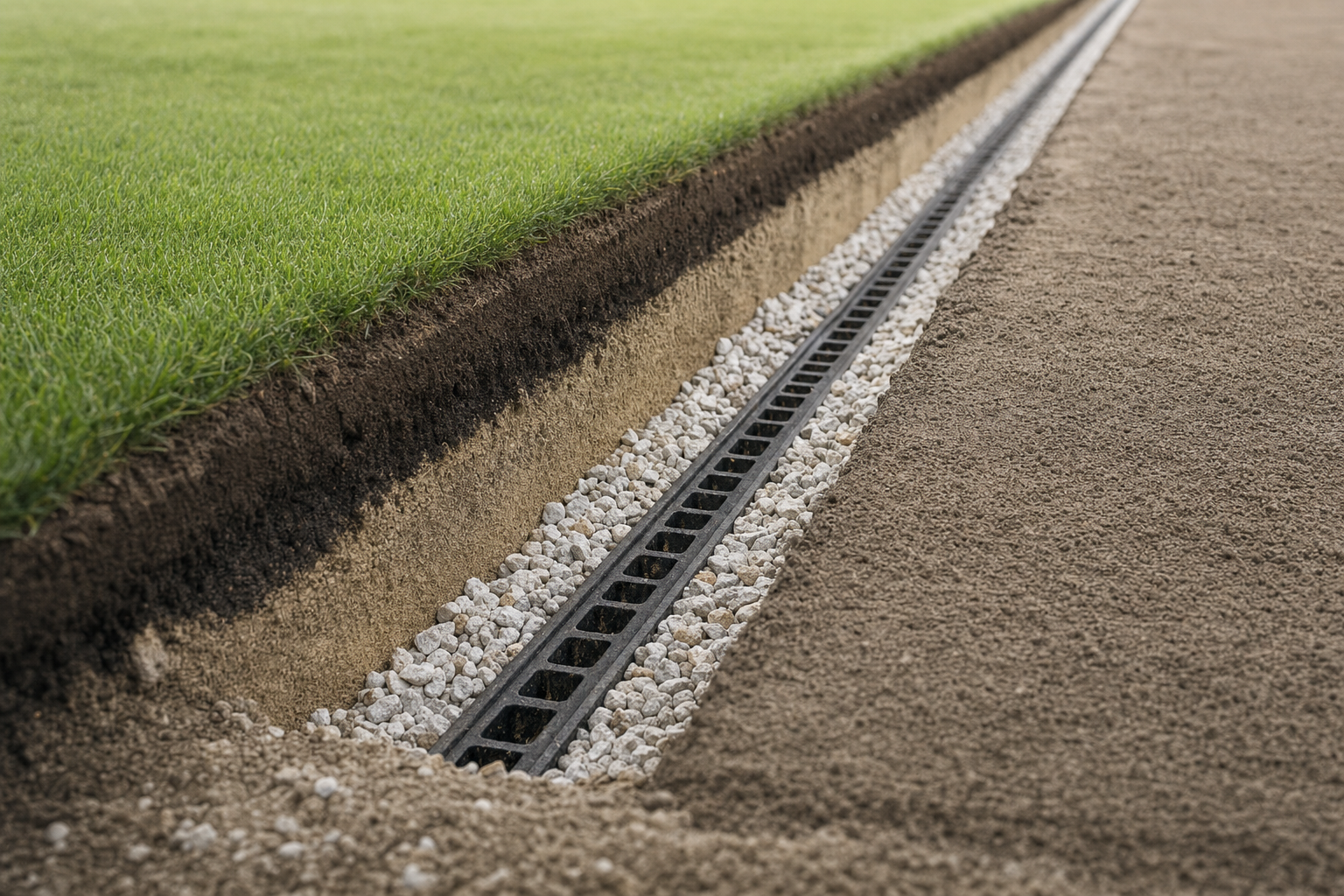
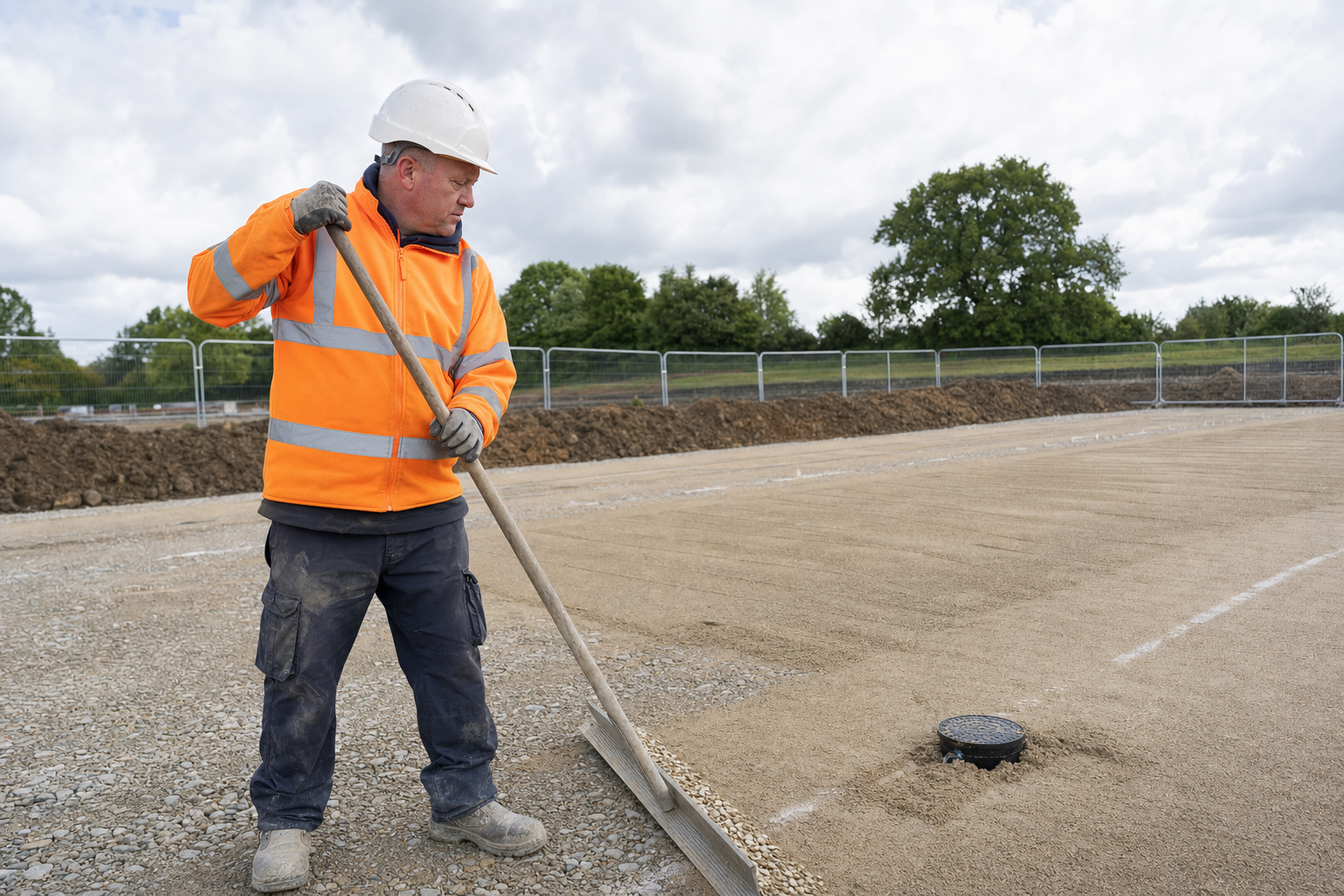
The groundworks behind consistent play
Earthworks, grading, drainage and rootzone preparation all affect how the pitch performs once play begins. We also talk through site access for machinery and materials, the choice between seed or turf establishment and the time the surface needs before regular use. A commercial project through Royal Landscapes benefits from experience across wider grounds and specialist surface work, which helps when the aim is a stable, even field rather than a quick finish that struggles through its first season.
Frequently asked questions
What affects the specification for a new sports pitch?
The intended sport, expected intensity of use, site dimensions, ground conditions and available maintenance all influence the build. A pitch for regular school use may need different decisions from one intended for less frequent play, so the specification needs the real context.
Why is drainage so important in sports pitch construction?
Because even levels mean very little if the field cannot shed water properly. Poor drainage affects play, wear and recovery, and it often shows up early. We treat grading and drainage as core parts of performance, not as separate extras after the shaping is done.
Can you work on sites with machinery access limits?
Site access is one of the first practical points we discuss. We need to understand routes for machinery and materials, along with any restrictions that could affect staging. That helps us judge the sensible approach and avoid making assumptions that the site will later disprove.