
Better paving for everyday use
Useful zones made neater
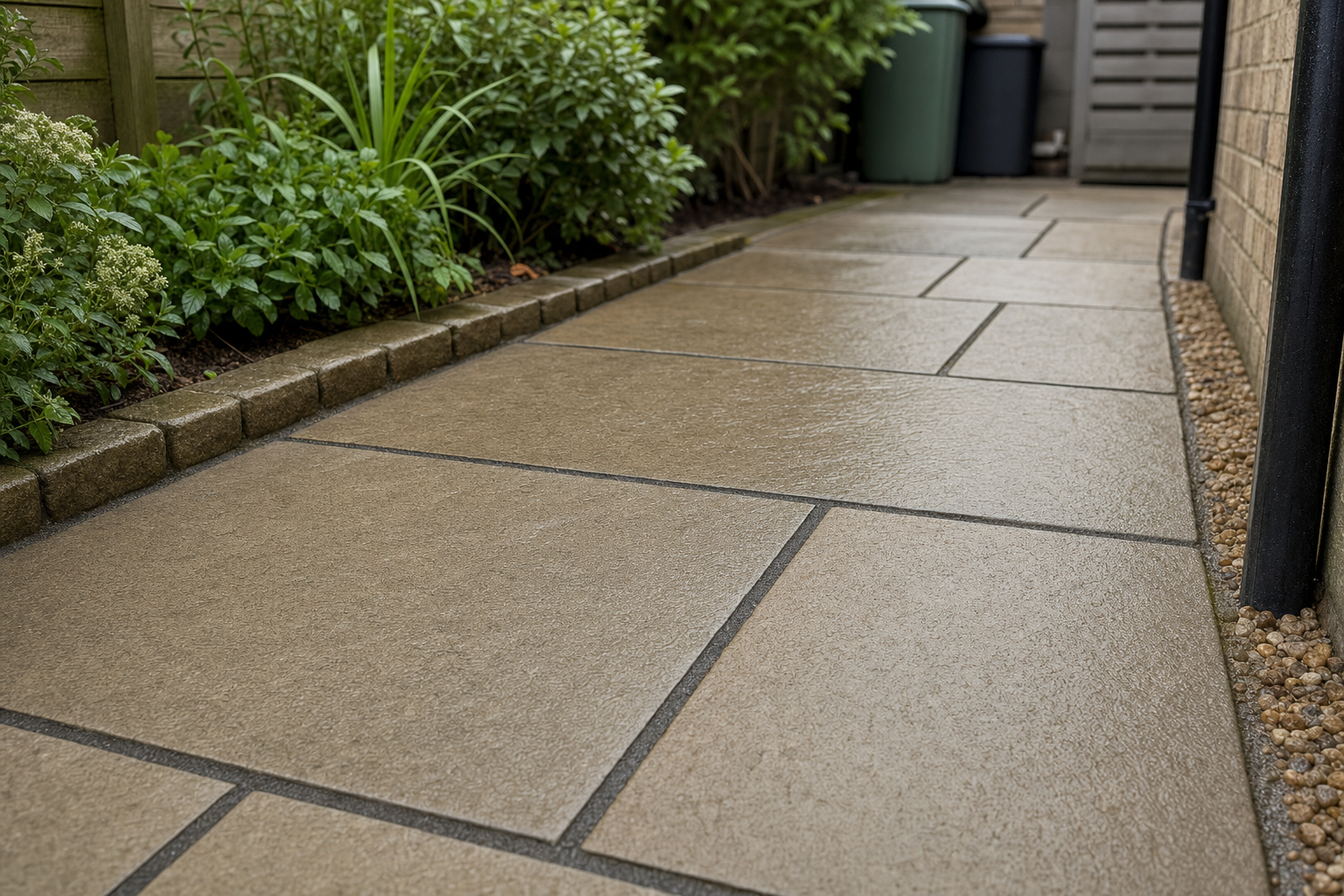
Utility corners, side returns and small seating areas can be surfaced without feeling tacked on.
Better links between spaces
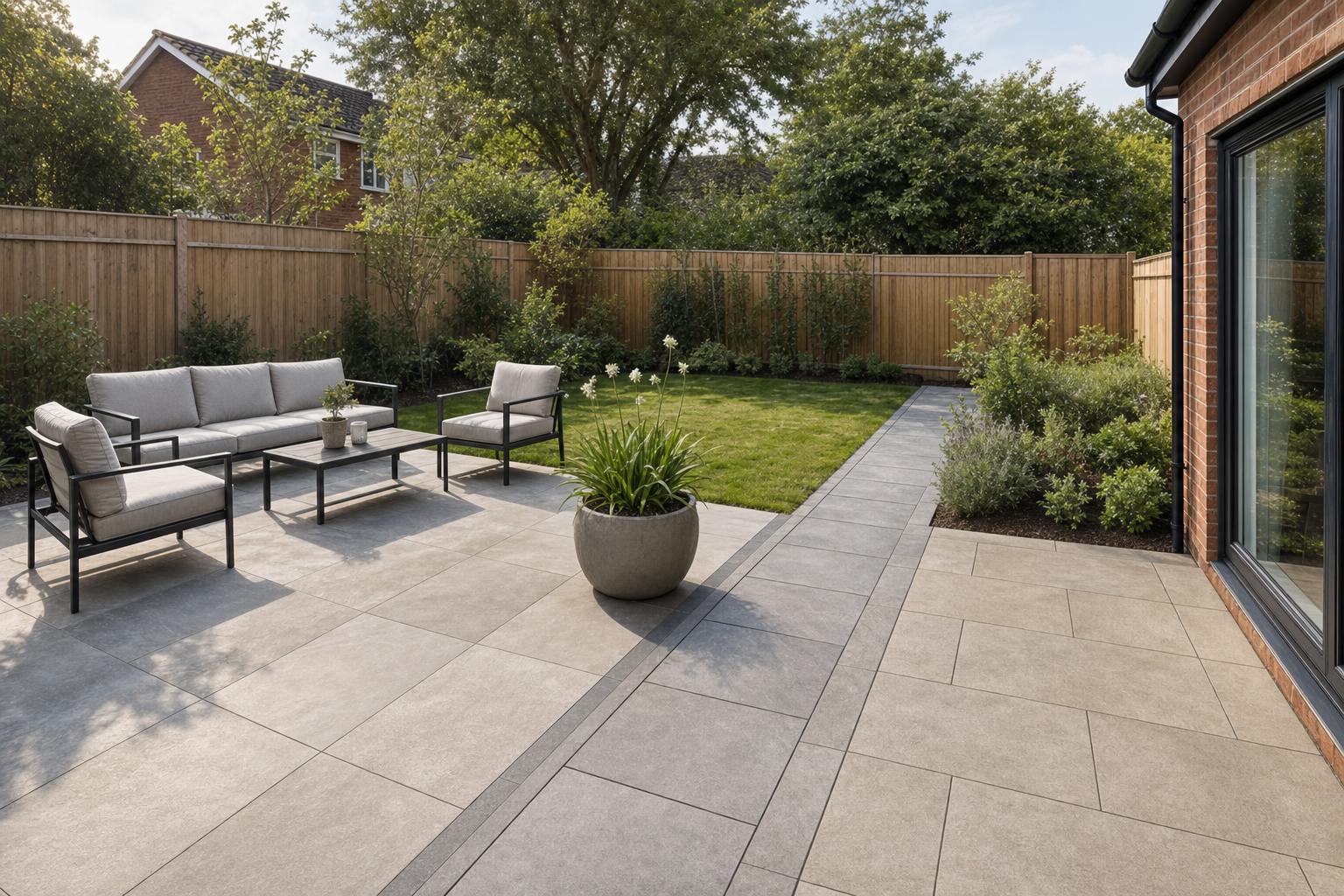
Paving can connect separate parts of the garden with fewer awkward changes in level.
Materials matched to use
Grip, shade and cleaning needs are considered before the paving type is chosen.
Useful surfaces for the forgotten corners
Garden paving is often the fix for those bits of outdoor space that get used all the time but rarely get planned properly. Side returns, bin areas, paths between zones and small utility corners can quickly become muddy, uneven or awkward underfoot. Slab size, texture and colour all help decide whether these areas feel tacked on or properly part of the garden. Choosing Royal Landscapes means we look at how the paved space will be used, how much grip it needs, how shaded it is and how it should relate to nearby lawn edges, boundaries and seating areas.
Neat levels between one area and the next
Underneath, the work still needs the same care as a main patio. We prepare the base, support the edges, make accurate cuts and set the finished falls so water moves away from buildings and planted areas sensibly. That becomes especially important where several paved spots need to connect without awkward steps or random changes in level. With Royal Landscapes, garden paving can also be tied into patios, paths or a full makeover, which helps the whole layout feel more settled and easier to use.
Frequently asked questions
Where does garden paving make the biggest difference?
Often in the places you walk through or use every day. Side returns, bin areas, small seating spots and links between parts of the garden can all become cleaner and easier underfoot with well planned paving and proper falls for drainage.
Can different paved areas be made to look connected?
Yes. Slab size, colour, texture and laying pattern can help separate areas feel related rather than random. We also look at how the paving meets lawn edges, boundaries and patios so the transitions do not feel like afterthoughts.
Why do finished levels matter so much with paving?
Because poor levels create trip points, untidy edges and water going where it should not. We set the falls and connections carefully so separate paved areas sit properly against buildings, lawns and planted spaces rather than competing with them.