
Practical help for wet ground
Cause checked first
We assess the source of the water problem before suggesting drains, channels or regrading.
Matched to the site
Low points, soil type and hard-surface runoff all affect which solution is worth doing.
Best done with other work
Drainage is easier to improve when new paving, driveways or lawns are also being planned.
Find the cause before choosing the cure
If the lawn stays soft for days, paving sheds water the wrong way or one corner turns into a small marsh after heavy rain, the fix starts with finding the cause rather than throwing in a random drain and hoping for the best. A waterlogged garden can come from poor falls, compacted soil, low points, hard-surface runoff or drainage routes that are no longer doing much. With Royal Landscapes, we look at the shape of the ground, downpipes, existing outlets and how water behaves across the whole area before deciding what sort of remedy fits the site.
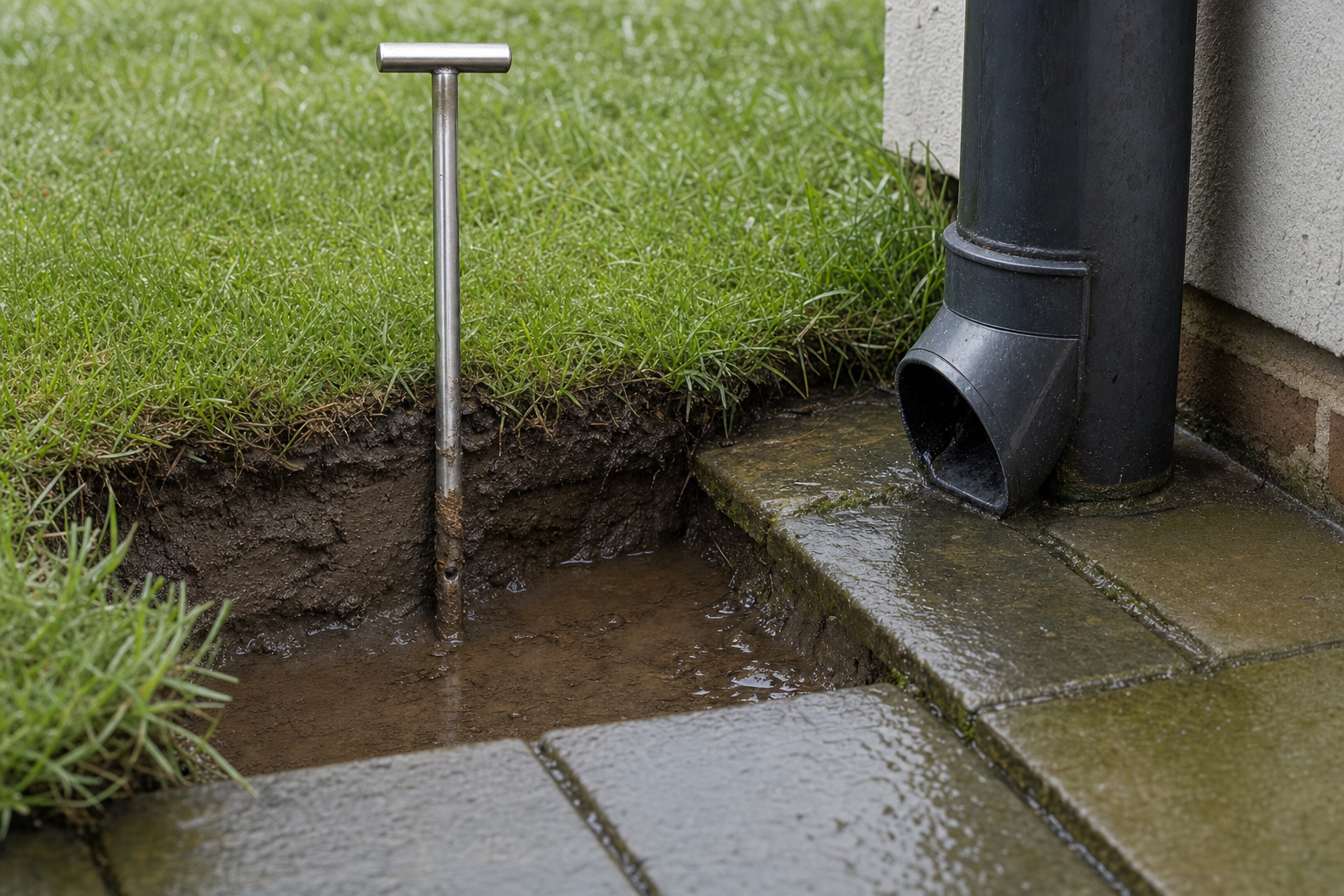
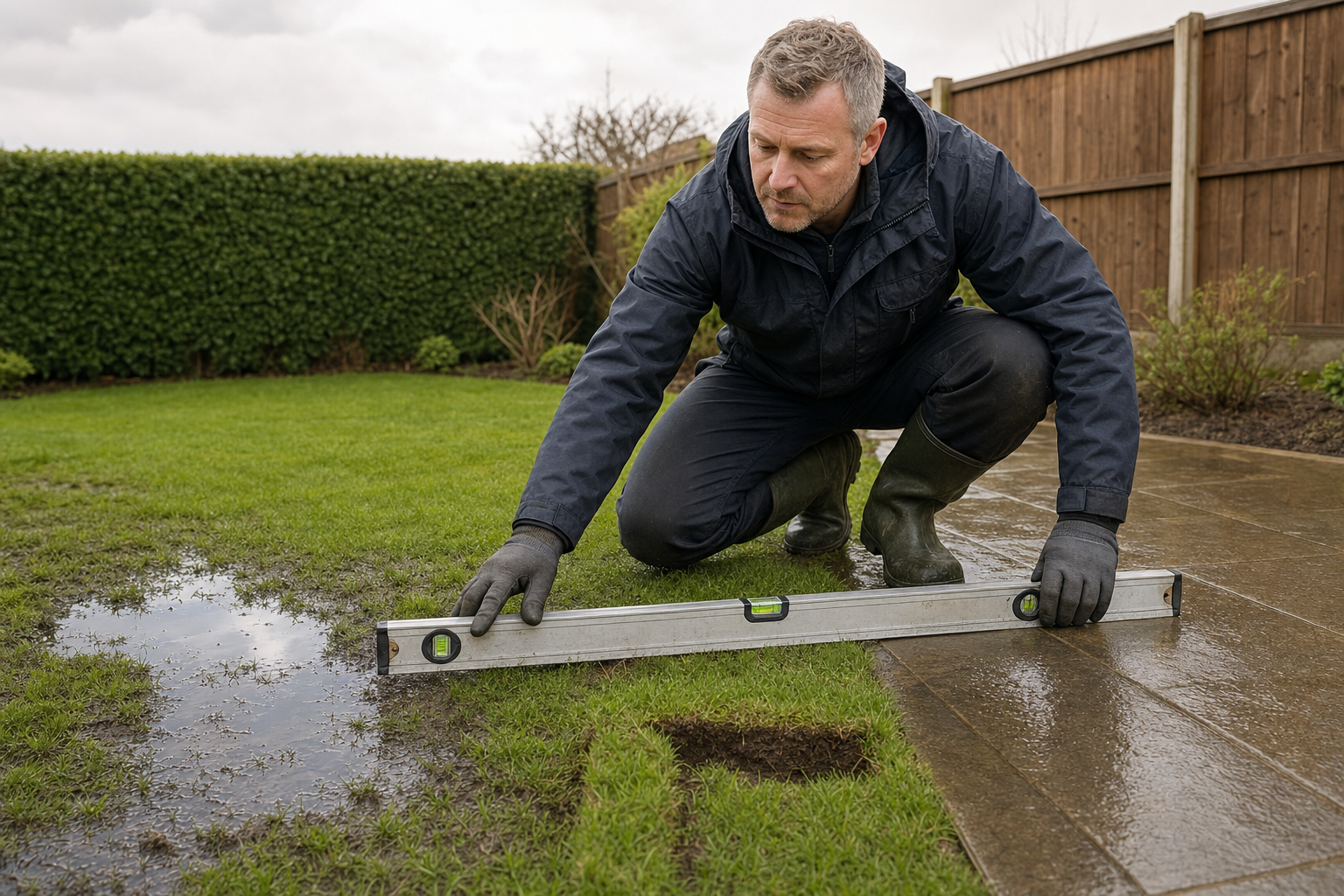
Drainage that works beyond the next downpour
The right solution may be regrading, a French drain, channel drainage, a soakaway or better lawn preparation, and sometimes it is a combination. What matters is that the outlet, filter materials, gradients and future maintenance are considered properly so the system can keep working. A drainage project through Royal Landscapes also makes more sense when it is coordinated with new patios, driveways, turf or wider alterations, because that is the point where levels and water routes can be improved together.
Frequently asked questions
Why is my garden still waterlogged days after rain?
Water can linger for several reasons, including compacted soil, poor natural falls, blocked routes, runoff from hard surfaces or low spots that simply collect it. The right fix depends on which of those is happening, so we start by looking at the ground rather than guessing.
Will one drain solve the whole problem?
Sometimes, but not always. Some gardens need regrading, some need a French drain or channel, and some need several measures working together. The outlet and long-term maintenance matter as well, so the answer is usually in the full setup rather than one dramatic trench.
Can drainage be improved during paving or lawn work?
Yes, and that is often the sensible moment. When surfaces and levels are already being changed, we can deal with water movement at the same time instead of trying to retrofit a fix after the new paving, turf or driveway is already in place.