
Paths that belong in the layout
Routes planned around use
We place the path where people actually walk, not where it looks neat on a drawing.
Surface matched to traffic
Paving, gravel and stepping-stone options are weighed against stability and upkeep.
Joins kept clean
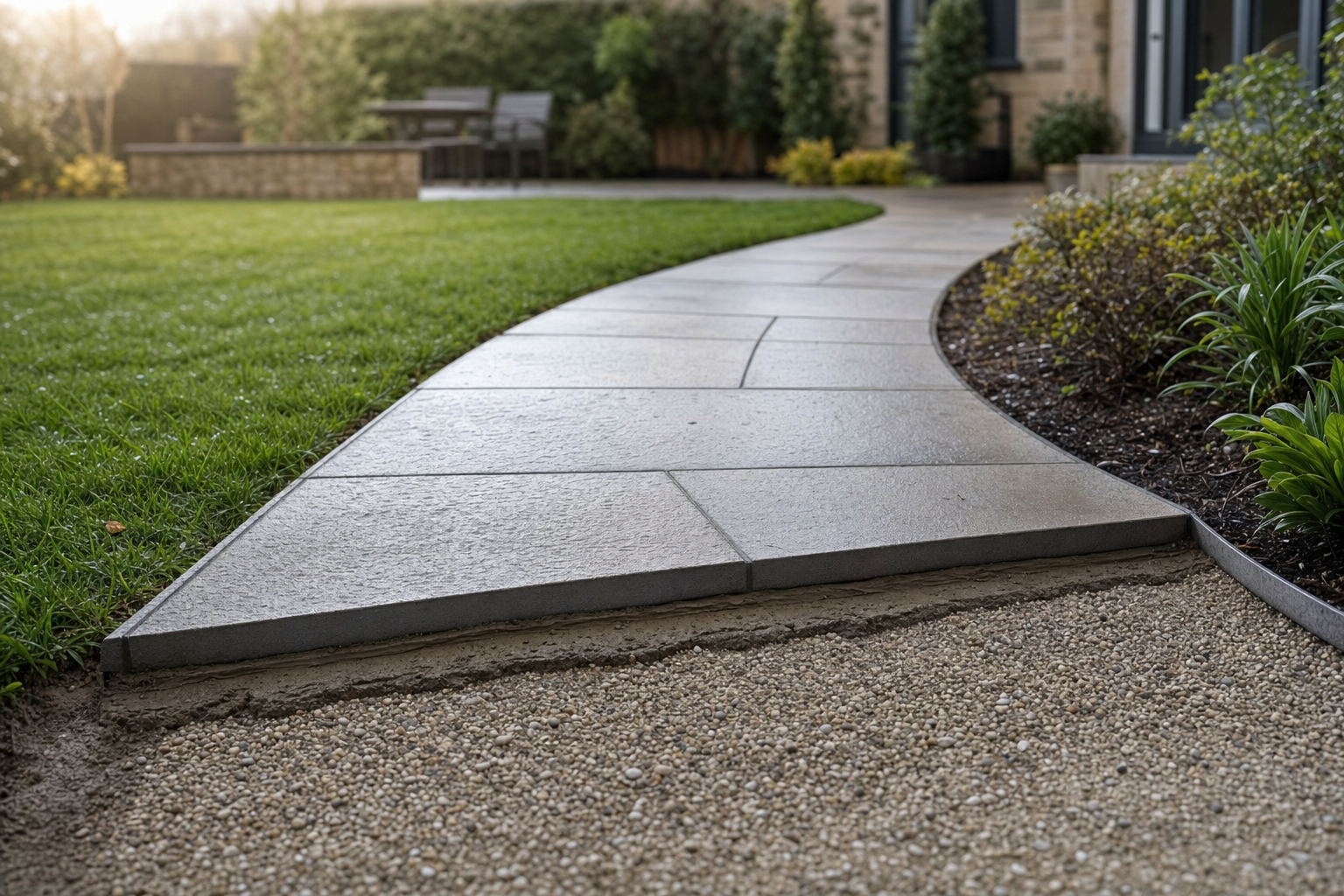
Path edges and transitions are built to sit neatly with gates, patios and lawns.
Routes that make the garden easier to use
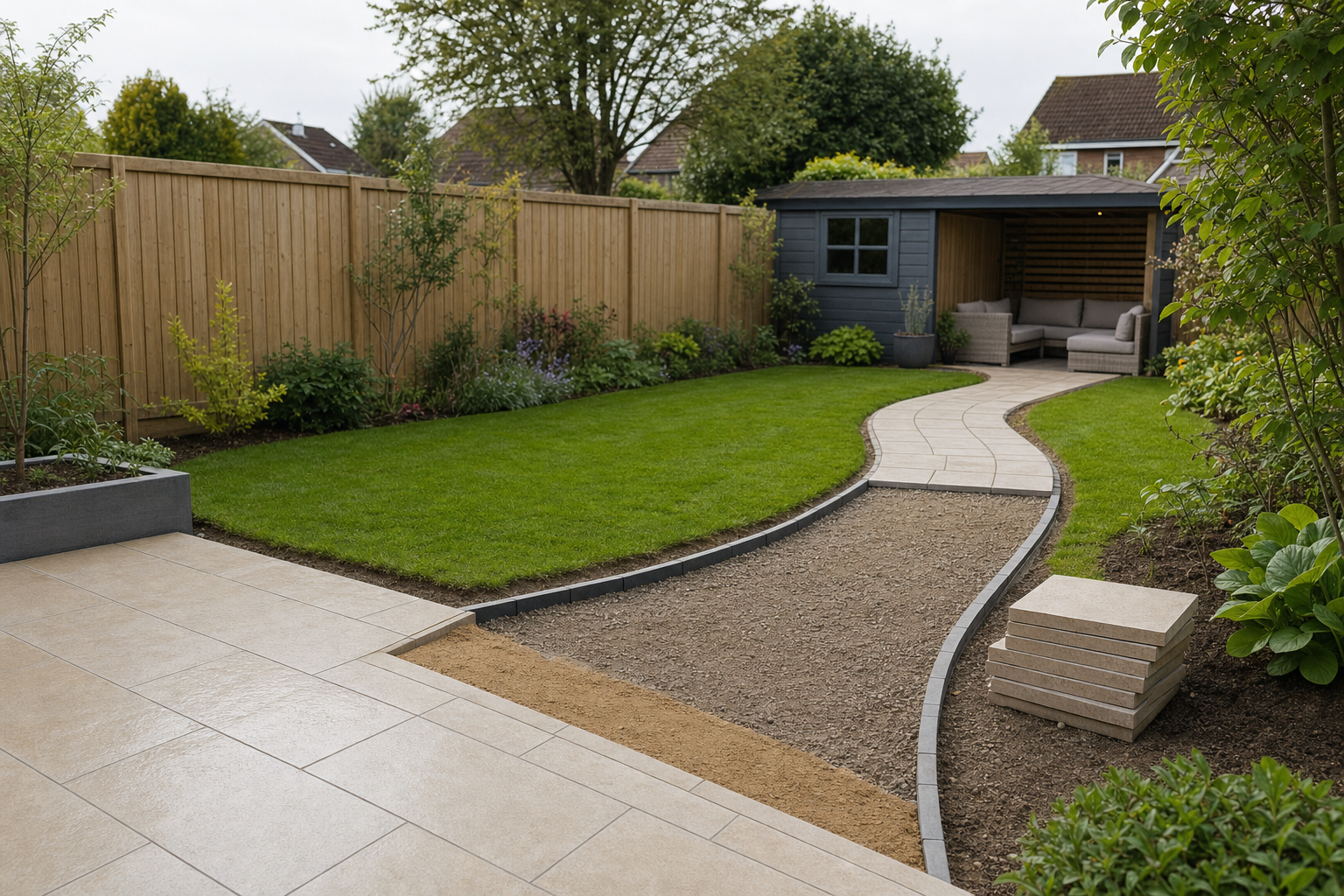
A good path stops you doing that sideways shuffle across wet grass while trying not to stand in the bit you seeded last week. More seriously, it makes everyday movement through the garden simpler and protects softer ground from constant wear. The route needs to suit how you actually move between the house, patio, shed, lawn and planting areas, not where a path happens to fit on a sketch. With Royal Landscapes, we look at width, straight or curved lines, level changes and the surfaces around the path so it becomes part of the layout rather than an afterthought.
Materials, edges and tidy connections
Paved, gravel and stepping-stone paths each create a different feel and bring different levels of stability, drainage and upkeep. Once the material is chosen, we prepare the sub-base, set the edging, form the surface falls and make sure the joins where the path meets gates, patios or lawns are clean and safe. Through Royal Landscapes, pathways can also repeat colours and lines used elsewhere, which helps the whole garden feel more deliberate and easier to read at a glance.
Frequently asked questions
How wide should a garden path be?
That depends on what the path is for and who uses it. A route that carries regular traffic, tools or garden equipment often needs more width than a decorative link. We look at how you move through the garden before fixing the line and dimension.
What is the best material for a garden path?
There is no single answer. Paved paths give more stability, gravel can drain well and suit a looser look, and stepping stones can work for lighter routes. The best choice depends on maintenance, visual style, drainage and how often the path will be used.
Can a new path tie in with an existing patio or lawn?
Yes, and it usually should. We look at levels, edging and material repetition so the path feels intentional rather than like a separate strip added later. Clean joins where the surface meets a patio, gate or lawn make a big difference to how finished the garden feels.