
Why block paving stays popular
Pattern without guesswork
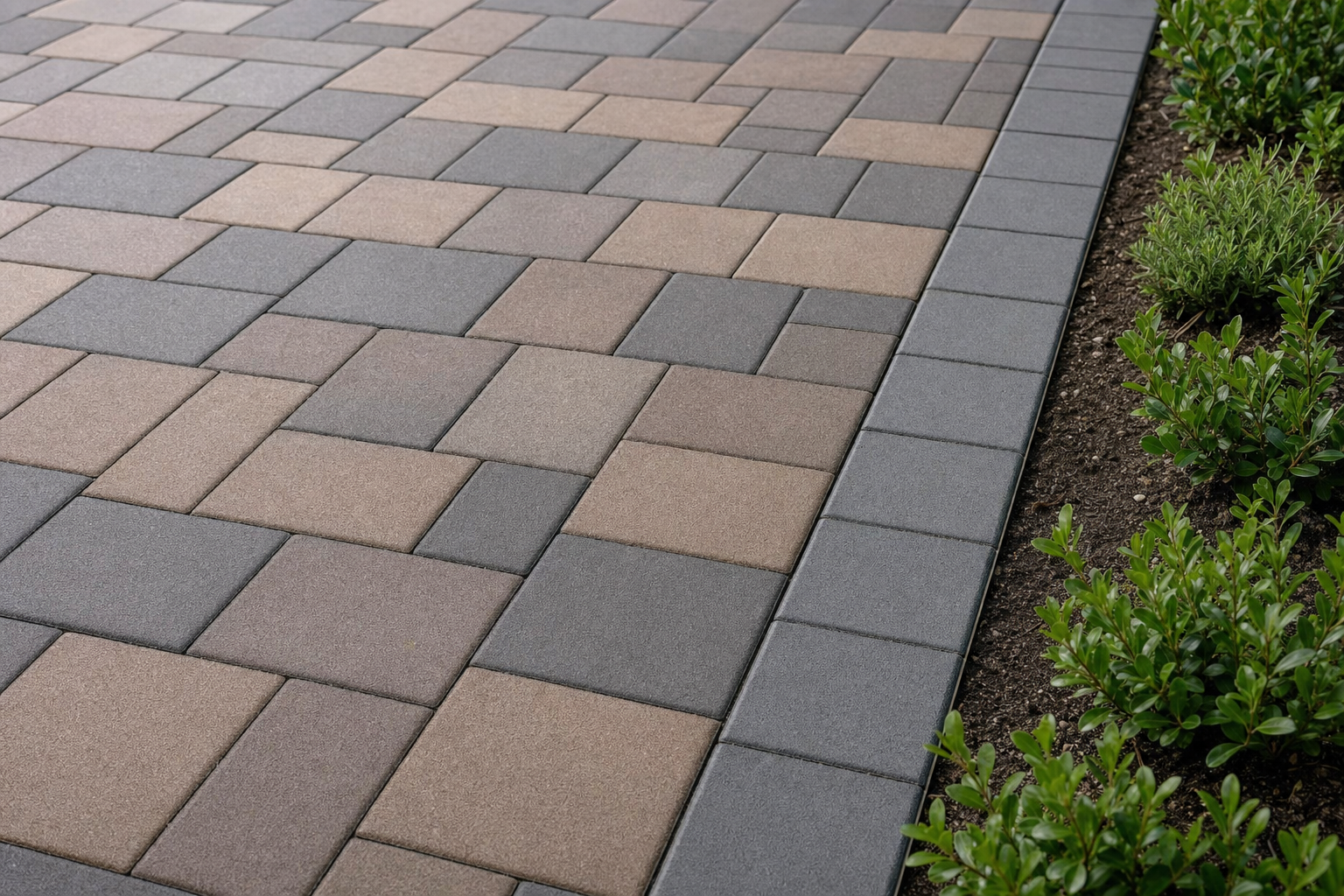
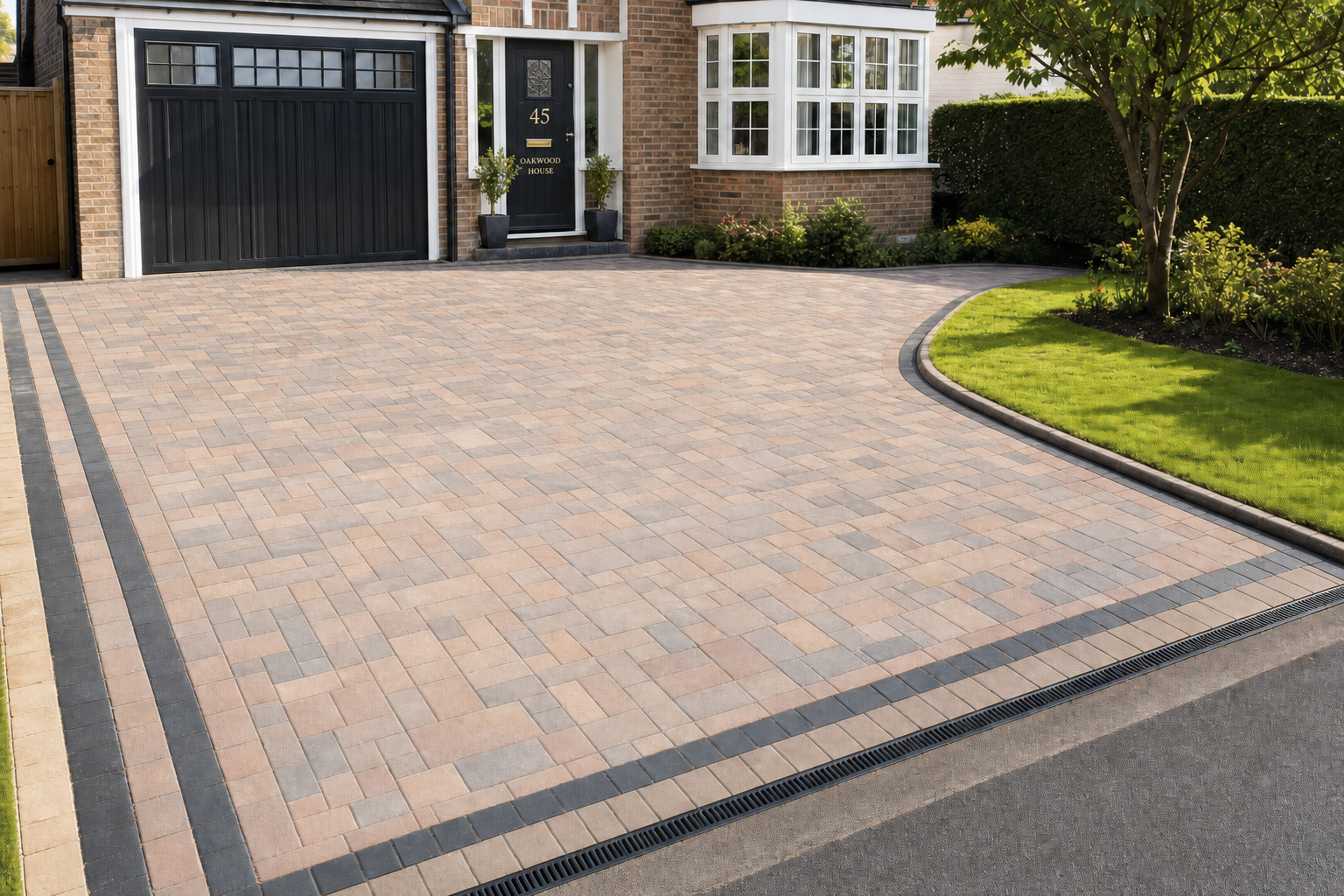
Colours, borders and laying styles are chosen to suit the frontage rather than compete with it.
Local repairs stay possible
Individual blocks can be lifted if access or future repair work is needed in one area.
Drainage built into layout
Gradients and channels are planned with the paving instead of being bolted on afterwards.
Defined parking with room for detail
Block paving suits you if you want a driveway with clear definition, pattern and the option to lift individual areas later if access or repairs are needed. The finished look can be changed a lot by block size, colour blend, texture and laying pattern. Borders and edge details also make a difference, especially where the drive meets planting, paths or the entrance. With Royal Landscapes, we look at how much parking space you need, how the surface should sit with the house and where the drive needs to be strongest, then build the design around the real site rather than a catalogue picture.
What keeps block paving stable
A block paving driveway only stays crisp if the structure below it is sound. We excavate, compact a proper sub-base, set the edge restraints, prepare the bedding layer and lay, cut and joint the blocks before final compaction. Gradients and drainage channels are checked as part of the build, not left as an afterthought. A driveway through Royal Landscapes also comes with sensible advice on cleaning, joint maintenance and replacing individual damaged blocks if the surface ever needs local attention.
Frequently asked questions
Is block paving easy to repair if part gets damaged?
One of the practical benefits of block paving is that individual areas can often be lifted and reset more easily than some continuous surfaces. That makes local access or repair work less disruptive, provided the original build-up and edge restraint were done properly.
How do you stop block paving from sinking or moving?
The key is in the preparation. Proper excavation, a well compacted sub-base, firm edge restraints and careful final compaction all help keep the driveway stable. The blocks may be the visible finish, but the structure underneath is what gives them long-term support.
Does block paving always get weeds in the joints?
Not always, but like most outdoor surfaces it benefits from some upkeep. Regular cleaning, sensible weed control and attention to the jointing sand help keep the surface tidier. We also explain how individual blocks can be maintained or replaced if a local issue appears later.