
Raised beds that earn their place
Height that helps access
Beds can be sized to reduce stooping and make planting easier to reach and maintain.
Material choice with purpose
Timber, brick and blockwork each change lifespan, look and relation to nearby paving.
Placed to frame the space
Beds can define zones without swallowing the walking room the garden still needs.
Planting space with shape and purpose
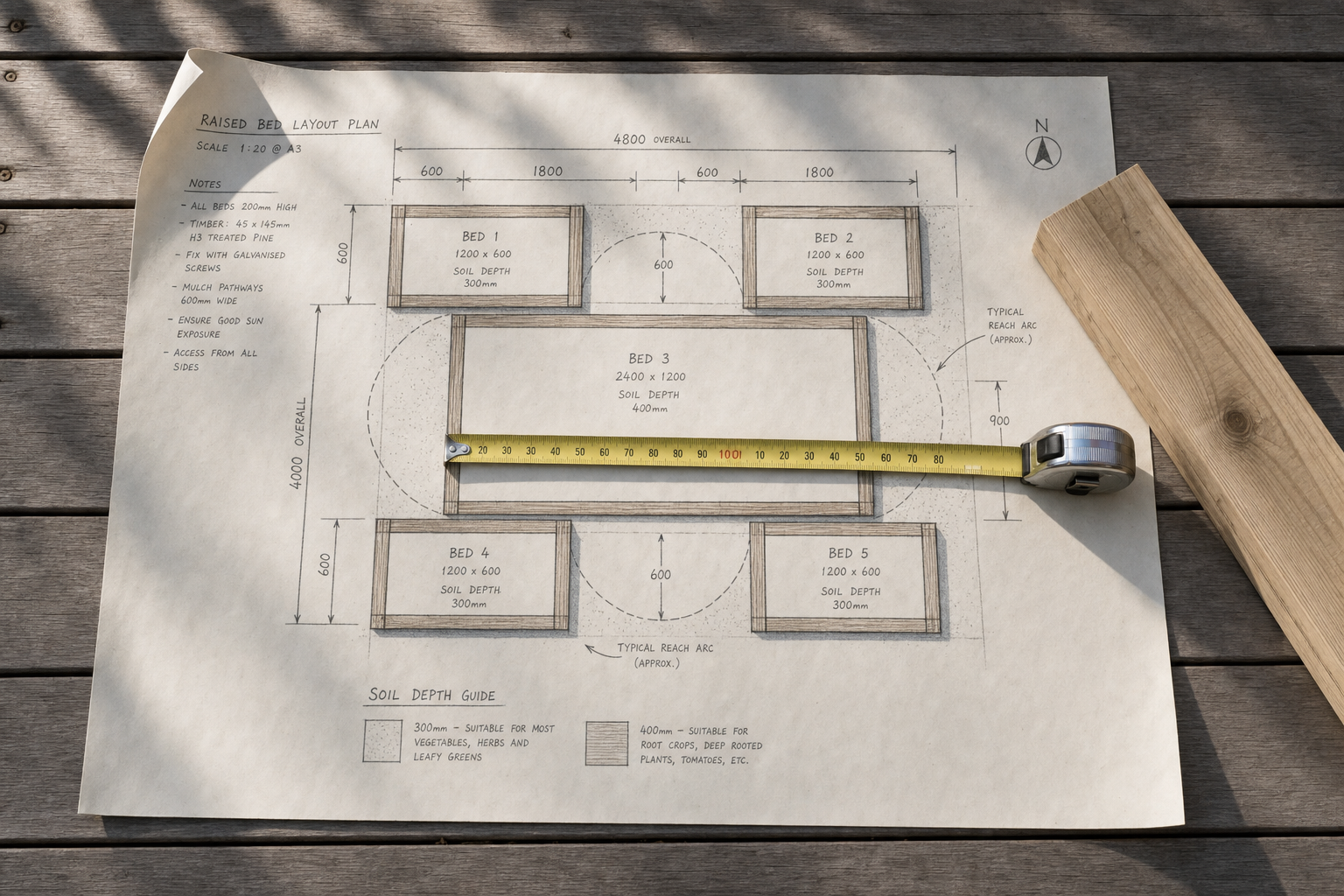
Raised beds are useful when planting needs a proper place rather than spare bits around the edges. They can organise flowers, shrubs, herbs or vegetables, add height to a flat plot and make gardening easier if bending down is becoming a nuisance. The best results come from sizing them properly for the way you will reach, water and maintain them. With Royal Landscapes, we look at location, width, working height, shape and soil depth so the beds suit both the plants and the people using the garden.
Built to hold soil and stay practical
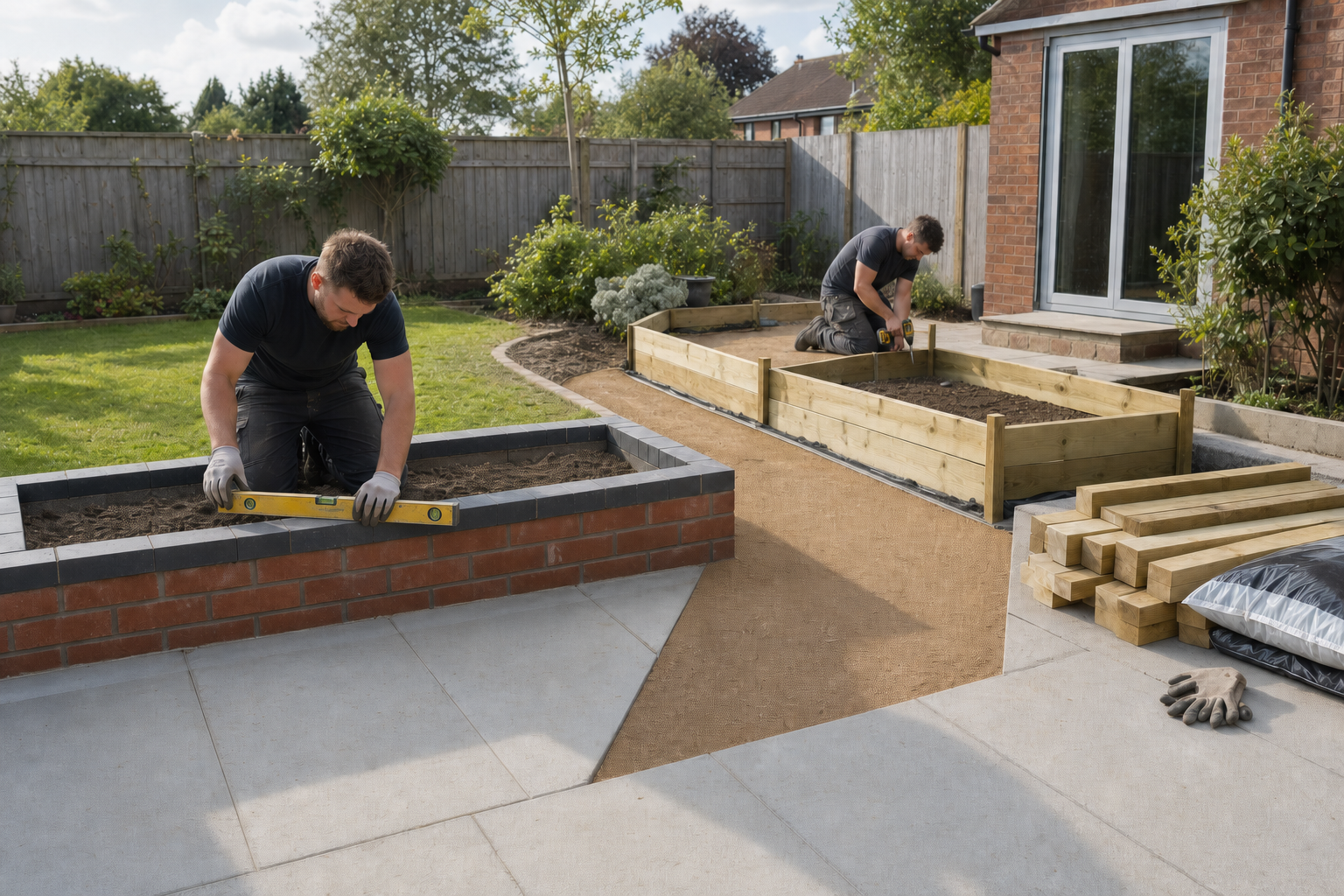
Timber sleepers, brick and blockwork each change the look, lifespan and relation to nearby paving, so the construction choice is part of the wider design rather than an isolated detail. Stable foundations, drainage, lining where needed and the right growing medium all matter if the beds are to keep their shape and grow well. A project with Royal Landscapes can position raised beds to frame patios, pathways or boundaries while still leaving enough room to move around without squeezing sideways.
Frequently asked questions
What can raised garden beds be used for?
They can organise flowers, shrubs, herbs or vegetables, define part of the layout and make gardening easier to reach. They also bring height into flatter plots and can help stop planting areas from feeling like leftover strips around the edges.
How deep do raised beds need to be?
That depends on what you want to grow and how the bed will be maintained. We look at working height, rooting depth and the type of planting planned so the bed is practical for both the plants and the person looking after it.
Which material is best for raised beds?
Timber sleepers, brick and blockwork each have strengths. The best option depends on the look you want, the relation to nearby paving, the lifespan you expect and how much structure the bed needs. We talk that through as part of the wider garden layout.